“The Ultimate Backpacking in Jasper National Park Guide – Packing Lists, Best Routes, and Expert Tips”
The Ultimate Backpacking in Jasper National Park Guide – Packing Lists, Best Routes, and Expert Tips
Located in the heart of the Canadian Rockies, Jasper National Park is a backpacker’s paradise, offering breathtaking mountain scenery, abundant wildlife, and a network of trails that cater to all levels of experience. With its untouched wilderness, glaciers, and turquoise lakes, Jasper is a destination that will leave you in awe. In this comprehensive guide, we will cover everything you need to know to plan an epic backpacking adventure in Jasper National Park, including packing lists, best routes, and expert tips.
When to Go
The best time to backpack in Jasper National Park is from June to September, when the weather is warm and dry. However, this is also the peak season, and you can expect to encounter more crowds on the trails. If you’re looking for a more solitary experience, consider visiting in the shoulder season, from May to June or September to October. Be aware that some trails may still be closed due to snow and ice during these periods.
Packing List
A well-planned packing list is essential for a comfortable and safe backpacking experience in Jasper. Here are the essentials to include:
- Shelter:
- Backpacking tent
- Sleeping bag and pad
- Ground tarp
- Clothing:
- Hiking boots and extra socks
- Base layers and insulating layers
- Waterproof jacket and pants
- Hat and gloves
- Quick-drying shirts and shorts
- Cooking Gear:
- Backpacking stove and fuel
- Cooking pot and utensils
- Water filter or purification tablets
- Food storage containers
- First Aid Kit:
- Bandages and band-aids
- Antiseptic wipes and ointment
- Pain relievers and antihistamines
- Blister care and moleskin
- Navigation and Safety:
- Map and compass
- GPS device or smartphone with GPS app
- Headlamp and extra batteries
- Bear spray and whistle
- Fire starter and matches
- Personal Hygiene:
- Toilet paper and hand sanitizer
- Biodegradable soap and toothbrush
- Wet wipes and hand towel
- Food and Water:
- Trail food and snacks
- Water bottles or hydration bladder
- Water purification tablets or filter
Best Routes
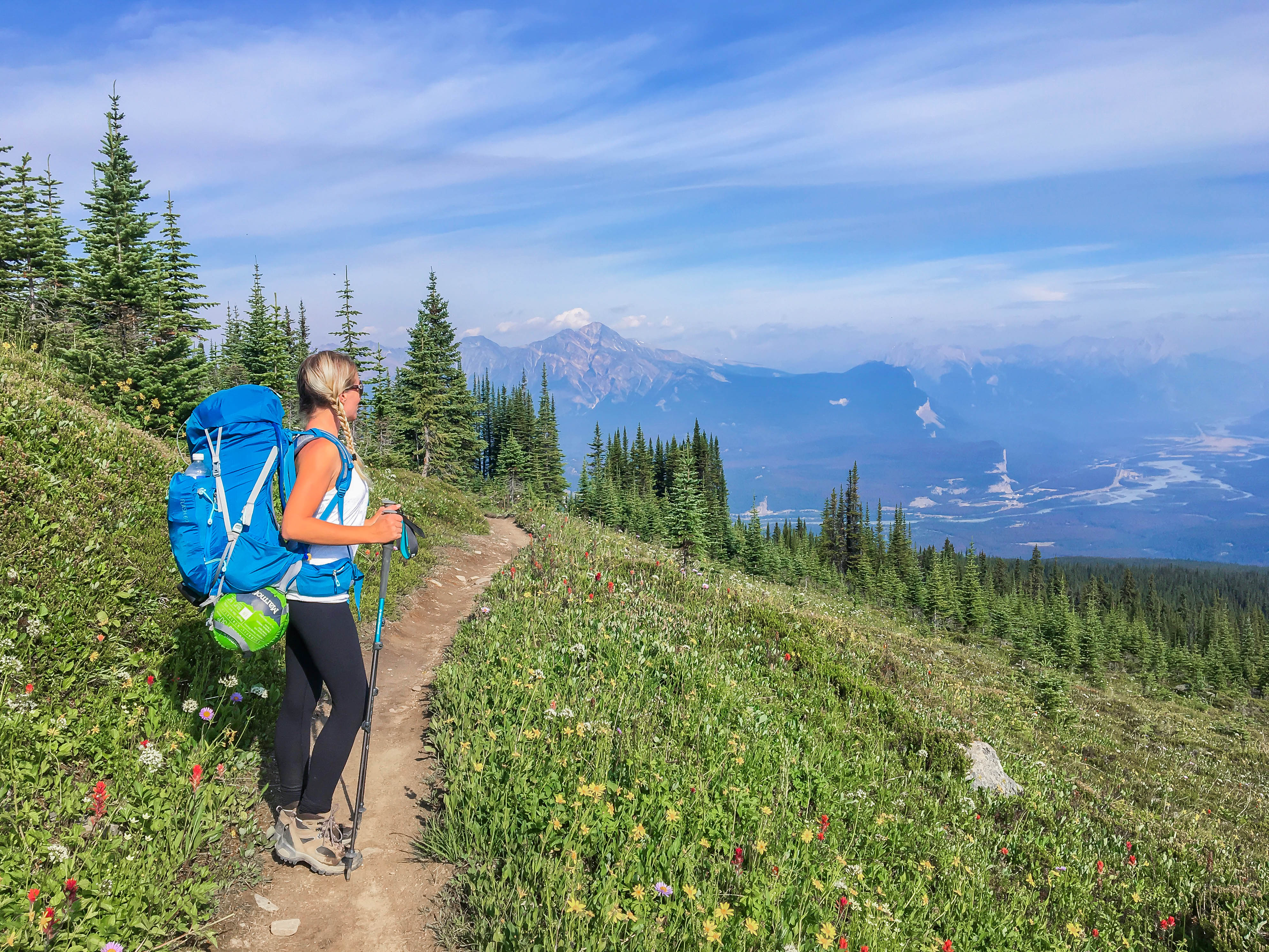
Jasper National Park offers a range of backpacking trails to suit all levels of experience. Here are some of the most popular routes:
- Skyline Trail: A 44km trail that takes you through alpine meadows, subalpine forests, and along ridges with breathtaking views of the surrounding mountains.
- Tonquin Valley Trail: A 43km trail that takes you through a picturesque valley surrounded by towering mountains and abundant wildlife.
- Brazeau Loop: A 74km trail that takes you through a variety of landscapes, including alpine meadows, subalpine forests, and river valleys.
- Wapta Icefield Traverse: A challenging 55km trail that takes you across glaciers and icefields, offering breathtaking views of the surrounding mountains.
Expert Tips
- Plan Ahead: Make sure to book your campsites and obtain any necessary permits well in advance, especially during peak season.
- Pack Light: Try to minimize your pack weight by choosing lightweight gear and packing only the essentials.
- Bring Bear Spray: Jasper is home to a healthy population of grizzly bears, so make sure to bring bear spray and know how to use it.
- Be Prepared for Weather: The weather in Jasper can be unpredictable, so make sure to pack layers and bring a waterproof jacket and pants.
- Respect the Environment: Follow the principles of Leave No Trace and minimize your impact on the environment by staying on designated trails and not littering.
Camping and Accommodation
Jasper National Park offers a range of camping options, from backcountry campsites to frontcountry campgrounds. Here are some of the most popular options:
- Backcountry Campsites: Jasper has a range of backcountry campsites that are accessible only by hiking or backpacking. These sites are equipped with basic amenities, such as outhouses and bear-proof food storage.
- Frontcountry Campgrounds: Jasper has several frontcountry campgrounds that offer more amenities, such as flush toilets, showers, and potable water.
- Hostels and Lodges: Jasper has a range of hostels and lodges that offer comfortable accommodation and amenities, such as restaurants and bars.
Safety and Emergency Procedures
Backpacking in Jasper can be a safe and enjoyable experience, but it’s essential to be prepared for emergencies. Here are some safety tips and emergency procedures to follow:
- Know Your Limits: Don’t push yourself beyond your physical limits, and be aware of your surroundings at all times.
- Bring a First Aid Kit: A first aid kit can help you treat minor injuries and prevent more serious ones.
- Carry a Satellite Phone: A satellite phone can help you call for help in case of an emergency.
- Know What to Do in Case of a Bear Encounter: If you encounter a bear, stay calm and follow the proper procedures, such as staying calm, speaking in a calm voice, and giving the bear plenty of space.
Wildlife and Bear Safety
Jasper is home to a wide range of wildlife, including grizzly bears, black bears, and mountain goats. Here are some tips for staying safe in bear country:
- Make Noise: Make noise while hiking to avoid surprising bears, such as talking, singing, or wearing bear bells.
- Stay in Groups: Stay in groups of three or more to reduce the risk of a bear encounter.
- Keep a Clean Campsite: Keep a clean campsite and store food and trash properly to avoid attracting bears.
- Know What to Do in Case of a Bear Encounter: If you encounter a bear, stay calm and follow the proper procedures, such as staying calm, speaking in a calm voice, and giving the bear plenty of space.
Conclusion
Backpacking in Jasper National Park is an experience of a lifetime, offering breathtaking mountain scenery, abundant wildlife, and a range of trails to suit all levels of experience. With proper planning, preparation, and knowledge of the area, you can have a safe and enjoyable backpacking adventure in Jasper. Remember to pack light, bring bear spray, and respect the environment, and you’ll be well on your way to an unforgettable experience in one of Canada’s most beautiful national parks.
Additional Resources
- Parks Canada: www.pc.gc.ca
- Jasper National Park: www.jasperparklodges.com
- Leave No Trace: www.leavenotrace.ca
- Backcountry Camping: www.backcountrycamping.ca
By following this guide and using the additional resources provided, you’ll be well on your way to planning an epic backpacking adventure in Jasper National Park. Happy trails!

